
In this blog, you’ll learn:
|
A F International School of Languages – Pasadena & Thousand Oaks
Studying in the United States is an exciting opportunity, but adjusting to a new culture can feel overwhelming at times. Almost every international student experiences some degree of culture shock — and that’s completely normal.
The good news? Culture shock is temporary, and with the right strategies, you can adapt confidently and enjoy your new life in the U.S.
In this guide, you’ll learn what culture shock really is, the common stages students go through, and practical steps you can take to feel more at home while studying at the A F International School of Languages in Pasadena and Thousand Oak.
What Is Culture Shock?
Culture shock is the feeling of confusion, discomfort, or emotional stress that happens when you move into a culture very different from your own. This can include:
- New language and communication styles
- Different school systems and expectations
- New social norms and ways of interacting
- ·Unfamiliar daily routines and schedules
- New foods, customs, and environments
How Does it Impact You?
These changes can temporarily affect your confidence, mood, and sense of belonging — but they are part of the natural adjustment process.
If you are just starting your English studies, our Intensive English Program can help you build confidence in a structured, supportive environment
What Are the 5 Stages of Culture Shock?
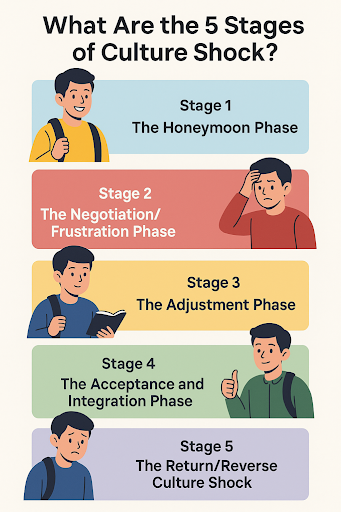
Cultural shock doesn’t hit all at once; it unfolds in phases, shifting from excitement to confusion to a gradual sense of comfort.
Stage 1 – The Honeymoon Phase: “Everything here is amazing!” (Week 1-4)
Everything feels new and exciting. You explore the city, meet new people, and enjoy the freedom of studying abroad.
Stage 2 – The Negotiation/Frustration Phase: “Why is everything so hard?” (Week 4-12)
The excitement begins to fade. Language barriers, unfamiliar systems, and daily routines may start to feel tiring or stressful.
Stage 3 – The Adjustment Phase: “I’m starting to figure things out.” (Month 3-6)
Daily life becomes more predictable. You understand your classes better, navigate transportation, and start feeling more comfortable.
Stage 4 – The Acceptance and Integration Phase: “This is my second home now.” (Month 6+)
You feel more relaxed and confident. You have routines, friendships, and a sense of belonging in your new environment.
- New challenges transform into opportunities.
- You enjoy the independence and routine you’ve built.
- You develop a deep sense of belonging and connection.
- You catch yourself explaining your new culture to friends back home.
Stage 5 – The Return/Reverse Culture Shock: “Why does home feel strange now?”
When you return home, familiar places can feel a little different. You may miss parts of your life in the U.S. while adjusting again at home.
Common Challenges International Students Face
Moving abroad isn’t always as effortless as social media makes it look. Behind the initial excitement, there are real hurdles that can feel heavy when you’re figuring them out alone.
· Language Barriers
Understanding fast speech, different accents, and informal expressions can be difficult at first. You may translate in your head, hesitate to speak, or feel nervous in group conversations. This is very common and improves with practice.
· Social Isolation or Loneliness
Building friendships in a new culture takes time. Social rules may feel unfamiliar, and it can be hard to know how to join conversations or make plans. It’s normal to feel lonely sometimes in the beginning.
· Academic Pressure
U.S. classrooms may use different teaching and grading styles. You may need to adjust to participation grades, presentations, essays, and group projects. Balancing school, life, and possibly work can feel overwhelming at first.
· Homesickness
Missing family, friends, food, and familiar routines can affect your mood. Holidays and special occasions from home can feel particularly emotional when you’re far away.
· Stress or Low Motivation
Adjusting to a new country takes emotional energy. Feeling tired, stressed, or unmotivated at times does not mean you are failing — it simply means you are adapting.
· Unfamiliar Customs and Social Norms
Communication styles, humor, classroom behavior, and even tipping or small talk can be confusing. It takes time to understand what is considered polite or normal in the U.S.
Practical Strategies on How to Overcome Culture Shock

- Learn as much as you can about daily life, transportation, and classroom expectations in the U.S., both before and after you arrive.
- Build small daily routines, like a regular time for meals, study, and sleep. Routines help you feel grounded when everything else is changing.
- Get involved in school life. Join activities, clubs, or events at A F International and in the local community.
- Practice English every day by talking with classmates, teachers, and local students, and by using English media like movies and podcasts.
- Make your living space feel comfortable with photos, personal items, or familiar snacks from home.
- Use available support services, such as academic advising or orientation resources, and ask questions when something is unclear.
- Take care of your health by eating well, sleeping enough, moving your body, and taking breaks when you need them.
- Explore your new environment. Visit local cafes, parks, and neighborhoods in Pasadena or Thousand Oaks to build familiarity.
- Stay curious and ask questions about things you don’t understand — people are often happy to explain their culture.
- Reach out early to a trusted teacher, advisor, or friend if stress or worry begins to interfere with your daily life
If you are looking for ESL classes in the Los Angeles area, you can explore our Pasadena campus programs here: https://afint.com/esl-classes-pasadena/
For students who prefer the Thousand Oaks / Westlake Village area, learn more about our ESL programs here: https://afint.com/esl-classes-thousand-oaks/
Myths About Culture Shock — And the Truth Behind Them
- Myth: “If I feel culture shock, I chose the wrong school.”
Truth: Culture shock is a normal response to change and happens everywhere — even at the best schools. - Myth: “Everyone adjusts in a few weeks.”
Truth: Each student’s timeline is different. Some adjust quickly, others slowly, and both are completely okay. - Myth: “I should only spend time with people from my country.”
Truth: Spending time with people from your home country can be comforting, but building new friendships helps you grow and adapt faster. - Myth: “Asking for help means I’m weak.”
Truth: Seeking help shows strength and self-awareness. Support exists because adjustment can be challenging. - Myth: “Culture shock disappears overnight.”
Truth: Culture shock usually fades gradually as you build routines, friendships, and confidence.
The 5 R’s of Culture Change
These five ideas can help you check in with yourself and stay aware of your growth:
- Routines – What daily habits are helping you feel stable?
- Reactions – How do you respond to new situations, and what can you learn from that?
- Roles – What new roles are you taking on as a student abroad?
- Relationships – How are your friendships and connections changing and growing?
- Reflections – What are you learning about yourself through this experience?
30-Day Culture Shock Adjustment Plan
- Days 1–7: Build Your Foundation
- Attend orientation and explore the campus.
- Learn where important offices are and how to contact them.
- Set a simple morning or evening routine.
- Locate grocery stores, pharmacies, and other essentials near your home.
- Days 8–14: Get Involved
- Join at least one school activity or club.
- Talk to classmates before or after class.
- Visit a new place in the city, like a park or café.
- Schedule time to review your class materials and ask teachers questions.
- Days 15–21: Strengthen Connections
- Spend more time with people you enjoy being around.
- Join or form a study group.
- Try a new local food or experience.
- Write down a few things you appreciate about your new environment.
- Days 22–30: Feel More Settled
- Reflect on your progress and notice how much you have learned.
- Set goals for the next month in your studies and social life.
- Explore another neighborhood, museum, or cultural site.
- Create routines that combine your home culture and your new life in the U.S.
Final Thoughts
Culture shock is a normal and temporary part of life as an international student. With time, curiosity, and support, you will start to feel more confident, independent, and connected.
Studying abroad is a powerful experience that can shape your future in positive ways. Every challenge you overcome helps you grow stronger and more resilient.
How A F International Can Support You
At A F International School of Languages in Pasadena and Thousand Oaks, we offer small classes, friendly teachers, and a supportive environment designed for international students.
Whether you are beginning your English journey, joining our intensive programs, or looking to improve your professional communication skills, we are here to help.
Learn more about our English for professionals and communication programs here: https://afint.com/english-for-professionals-communication/ For general questions or to get started with enrollment, please contact us through our website: https://afint.com/