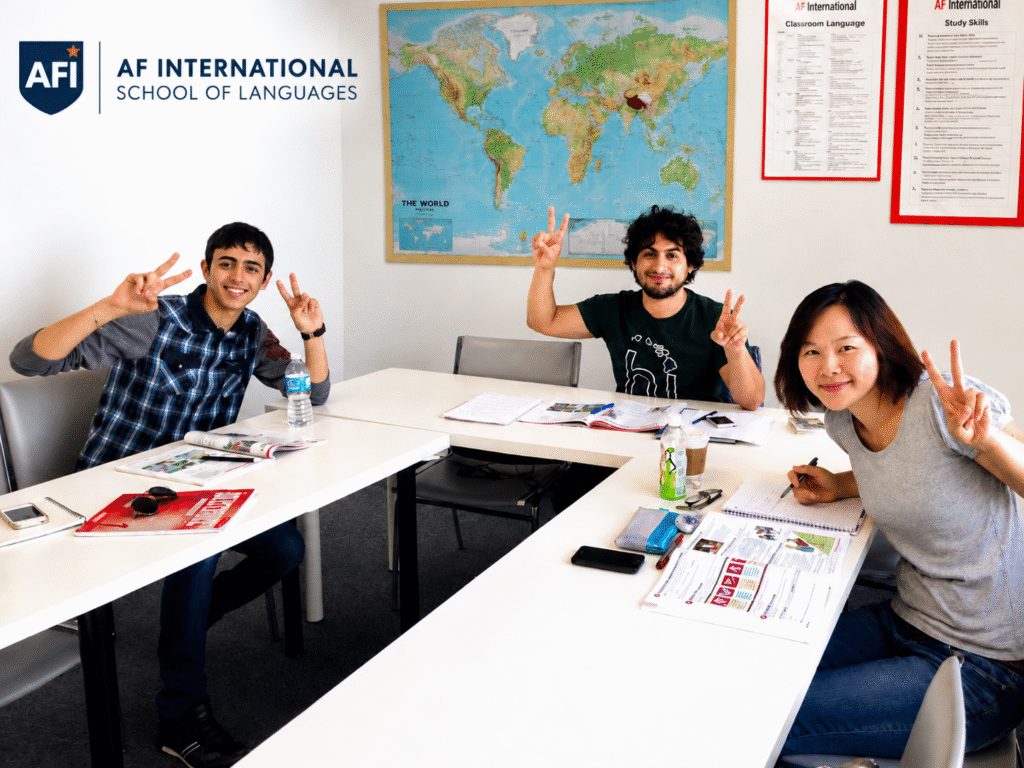
You may have studied English for years before deciding to come to the United States. But when you arrive and hear terms like ESL and EFL, it is easy to wonder: which one applies to me, and does the difference even matter? It does — and understanding it takes less than five minutes.
Key Takeaways
- Understand ESL before enrolling: ESL means studying English in an English-speaking country like the U.S., where students practice the language both inside and outside the classroom.
- Recognize what EFL means: EFL refers to learning English in your home country, where English is not part of daily life or communication.
- Know the difference before choosing a program: Understanding ESL and EFL helps international students select the right learning path based on their goals and study plans.
- Choose a SEVP-certified school: F-1 visa students must study at an approved SEVP-certified school in order to receive a Form I-20 and maintain legal student status.
- Expect real-world English practice: ESL programs in the U.S. offer daily opportunities to use English in real-life situations, helping students improve communication, academics, and confidence faster.
What Is ESL? What Is EFL?
ESL — English as a Second Language describes studying English in a place where English is the dominant language. If you move to the United States, Canada, the United Kingdom, or Australia and study English there, you are in an ESL program. English is not just a subject — it is the language of your daily environment.

EFL — English as a Foreign Language describes studying English in a country where English is not widely used outside of school. Students in Vietnam, Brazil, Japan, or Turkey who take English classes are typically EFL learners. Their exposure to English is limited to classroom hours.
Both terms fall under the broader category sometimes called ESOL (English to Speakers of Other Languages) — a general label that covers any program where non-native speakers are learning English, regardless of location.
A Simple Way to Tell Them Apart
| Question | ESL | EFL |
|---|---|---|
| Where do you study? | U.S., Canada, UK | Home country |
| Use English daily? | Yes | Usually No |
| Need F-1 Visa? | Often Yes | No |
| Learning Style | Immersion | Classroom Based |
Ask one question: Where am I learning English, and will I use it outside the classroom today?
- If yes → you are in an ESL environment.
- If no, or rarely → you are in an EFL environment.
ESL vs EFL: Key Differences
| Dimension | ESL | EFL |
|---|---|---|
| Where it happens | English-speaking countries (U.S., UK, Canada, Australia) | Non-English-speaking countries (Japan, Brazil, Turkey, Vietnam) |
| Daily English exposure | High — English is used at stores, workplaces, and in conversations every day | Low — English is mostly limited to scheduled class time |
| Main learning goal | Integrate into English-speaking society; survive and communicate in daily life | Pass exams; prepare for future academic or career opportunities abroad |
| Classroom emphasis | Real-world communication, speaking confidence, U.S. academic English | Grammar rules, structured reading, vocabulary for standardized tests |
| F-1 visa context | Applies — ESL schools in the U.S. must be SEVP-certified to enroll F-1 students | Does not apply — EFL programs exist outside U.S. immigration jurisdiction |
Why This Distinction Matters If You Are Coming to the U.S.
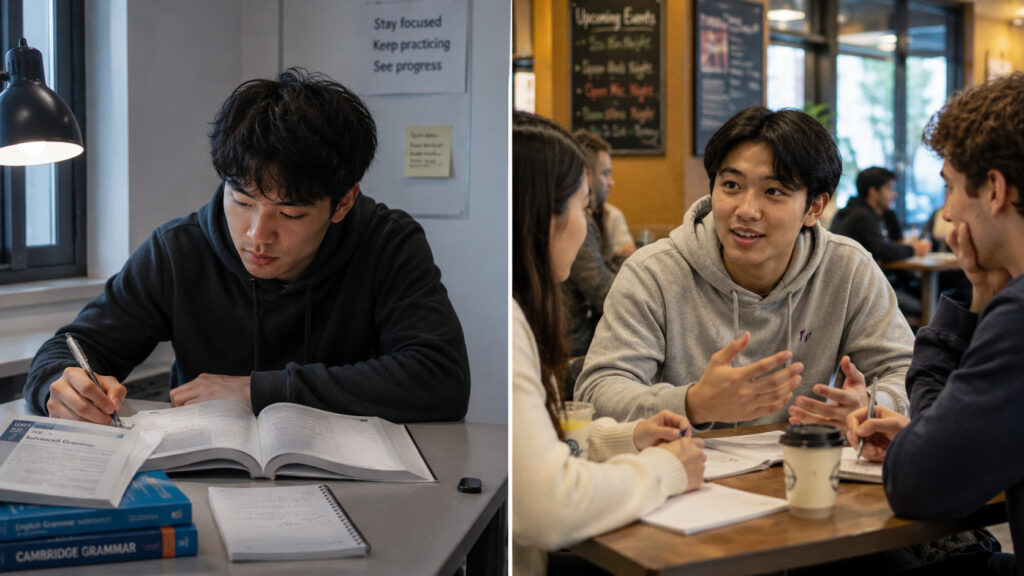
Most students who read about ESL and EFL come from an EFL background. You studied English in school for years. You learned grammar rules, memorized vocabulary, and passed exams. Then you arrived in the U.S. and found that the English you learned in a textbook felt different from the English people actually speak.
That is the ESL vs EFL gap in practice — and it is one of the most common experiences international students describe when they first arrive.
Once you are in the United States, you automatically become an ESL learner. Your environment changes everything. English is on signs, in conversations, in every email you receive. The program you enroll in must meet you at that level.
The F-1 Visa Requirement You Cannot Skip
If you are on an F-1 student visa, your ESL school carries a specific legal responsibility. Only SEVP-certified schools are authorized by the U.S. government to enroll F-1 students, issue Form I-20, and maintain your SEVIS record — the federal record that tracks your legal student status.
The Study in the States program (DHS) maintains the official database of certified schools. Enrolling in a school that is not SEVP-certified means your F-1 status will not be valid, regardless of how good the English instruction is.
This is the practical reason why “ESL school in the U.S.” is not just a label — it is a legal category.
To understand what this means for your enrollment documents, read AFINT’s guide to F-1 visa and I-20 information.
What ESL Programs in the U.S. Actually Cover
A common misconception is that ESL programs are only for beginners or only focus on grammar. U.S. ESL programs at certified schools cover a much wider range of skills, because students need to function in a real English-speaking environment from day one.
A structured ESL program in the U.S. typically includes:
- Speaking and listening — conversations, classroom discussions, pronunciation work
- Academic English — reading and writing for university or professional settings
- Daily communication — practical language for real situations (healthcare visits, banking, asking for directions)
- Cultural fluency — understanding how Americans communicate in different social and professional contexts
- Grammar in context — not grammar as a topic, but as a tool applied to real language use
Students in EFL programs often know grammar rules well but have limited practice applying them spontaneously. ESL programs close that gap through constant exposure and structured practice in a real-language environment.
How to Choose the Right ESL Program If You Are in the U.S.
Not every ESL school offers the same level of support. Before enrolling, check for these four things:
- SEVP certification — The school must appear in the DHS SEVP school search. If it is not listed, it cannot legally enroll F-1 students.
- Structured levels — A quality program places students by proficiency (beginner through advanced) so instruction matches where you actually are.
- Class size — Smaller classes mean more speaking time per student and faster progress in real communication.
- Location and community — Studying in a city with daily English immersion opportunities accelerates progress faster than studying in an isolated environment.
For more on evaluating programs before committing, AFINT’s beginner’s guide to choosing the right ESL course walks through the process in full. And if you are specifically looking at SEVP certification standards, the article “How to find quality SEVP-certified ESL schools in the U.S.” covers the accreditation details directly.
Knowing the Terminology Is the First Step
Understanding the ESL vs EFL distinction confirms what kind of learner you already are and what kind of program you now need. Students who arrive in the U.S. with an EFL background have already built a foundation.
An ESL program builds on it by adding the daily real-world application that transforms classroom knowledge into genuine fluency.
That transition from knowing English to using English under pressure — in a meeting, a lecture, or a conversation with a professor — is exactly what a structured ESL program is designed to produce.
AFINT’s Intensive ESL Programs (Levels 1 to 5) are designed for international students at every stage of that transition. Both the Pasadena campus and Thousand Oaks campus are SEVP-certified, and every enrollment includes direct DSO (Designated School Official) support for your Form I-20 and SEVIS management.
How AF International School of Languages Helps Students Transition from EFL to ESL
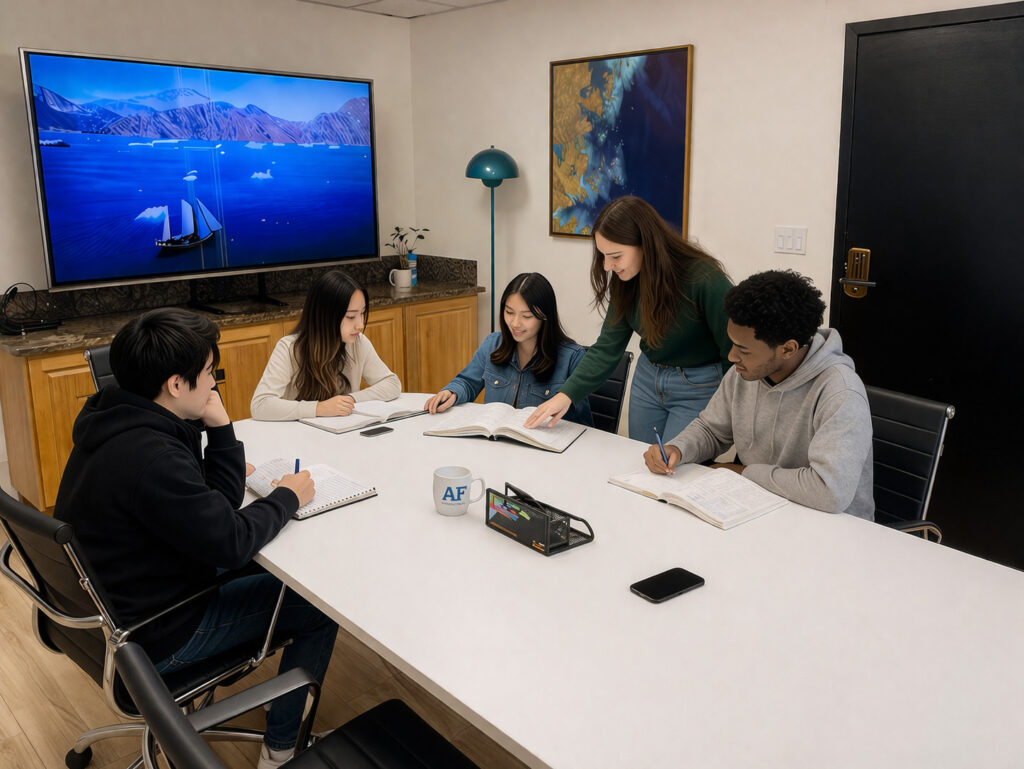
Many international students arrive in the United States after studying English for years in their home countries, only to discover that understanding grammar is very different from confidently using English in real-life situations. Participating in classroom discussions, speaking with coworkers, asking questions, or handling everyday conversations can feel much more challenging than expected.
At AF International School of Languages, we help students bridge the gap between classroom-based EFL learning and real-world ESL communication through immersive instruction, personalized placement, and practical language development.
With campuses in Pasadena and Thousand Oaks, California, serving the greater Los Angeles area, AF International School of Languages provides SEVP-certified Intensive ESL programs for international students seeking to improve their English skills while studying in an authentic English-speaking environment.
During orientation and placement testing, we evaluate each student’s speaking, listening, reading, and writing skills to place them at the most appropriate level for success.
Our Intensive ESL Program (Levels 1–5) helps students move from “I understand English” to “I can confidently use English every day” through:
✔ Small, interactive classes with individualized attention
✔ Daily speaking and listening practice in real-world communication settings
✔ Academic English preparation for college, university, and professional environments
✔ Cultural communication skills for life, work, and study in the United States
✔ F-1 visa and SEVIS support from experienced Designated School Officials (DSOs)
Whether your goal is attending college, improving workplace communication, transferring your F-1 status, or simply feeling more confident speaking English every day, our programs are designed to help you reach that next level faster through structured instruction and daily language practice.
Students are placed according to their current English level, so there is no need to be fluent before enrolling. Whether you are a beginner or an advanced learner, there is a pathway designed to help you succeed.
Explore our Intensive ESL Programs or contact our admissions team to learn more about studying English in Pasadena or Thousand Oaks, California.
Frequently Asked Questions
No — they refer to two different learning environments. ESL describes studying English in a country where English is the dominant language, such as the United States. EFL describes studying English in a country where English is not widely used in daily life. The skills and methods overlap, but the setting and daily exposure are different.
Most likely, yes. Students who take English classes in non-English-speaking countries are typically in EFL programs. When you move to the U.S. and enroll in an English program here, you transition into an ESL environment.
Neither is inherently harder. EFL students often find grammar-heavy instruction manageable but struggle with spontaneous speaking. ESL students benefit from constant immersion but may feel overwhelmed by the pace of real-world language use early on. The challenge is different in each setting, not greater or lesser.
Yes. ESL programs in the U.S. are open to community members, immigrants, and residents who do not hold an F-1 visa. The SEVP certification and Form I-20 requirement apply specifically to students who need F-1 status to be in the country.
Learning English in your home country (EFL) can build a strong foundation in grammar and vocabulary. However, studying in an ESL environment allows students to use English every day in real-world situations, often leading to faster gains in speaking confidence and listening comprehension.
ESOL stands for English to Speakers of Other Languages. It is a broader term that covers both ESL and EFL — any situation where a non-native speaker is learning English. Some programs use ESOL as their official name, but in U.S. school contexts, you will most often see ESL.
Not at most programs. SEVP-certified schools typically assess your level at enrollment and place you in the appropriate course. AFINT’s programs run from Level 1 (beginner) through Level 5 (advanced), so there is an entry point regardless of your current proficiency.
AF International (AFINT) is a SEVP-certified ESL school with campuses in Pasadena and Thousand Oaks, California, authorized to enroll F-1 international students and issue Form I-20.