
Automatic Visa Revalidation: A Guide for F-1 Students
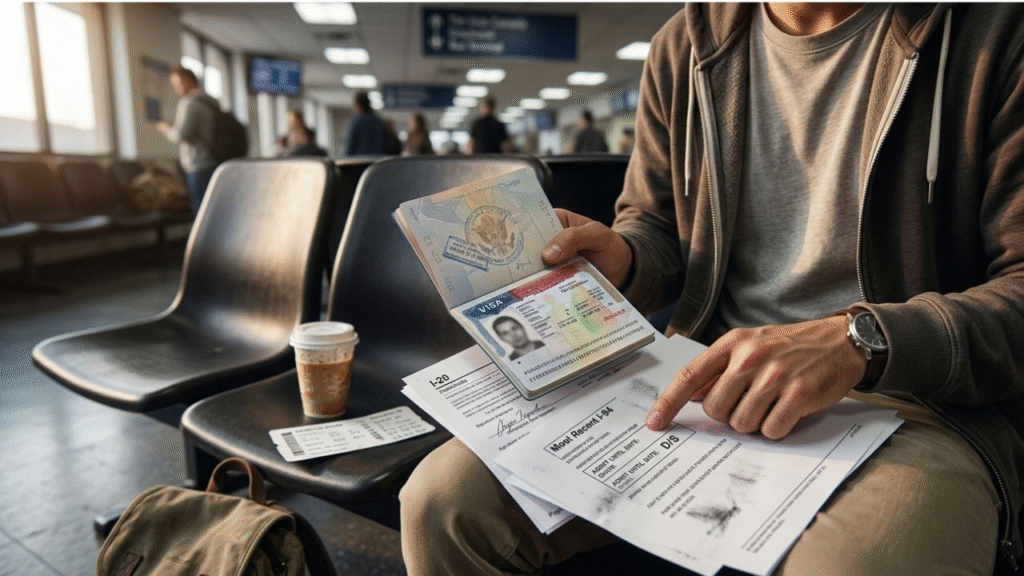
Many international students worry about traveling when their F-1 visa stamp has expired. Fortunately, U.S. immigration regulations allow certain students to re-enter the United States using a rule known as Automatic Visa Revalidation (AVR).
This rule allows eligible F-1 students to take short trips to Canada, Mexico, or certain Caribbean islands and return to the United States without obtaining a new visa stamp.
However, strict eligibility requirements apply. Understanding these rules can help you avoid complications when returning to the United States.
| Key Takeaways 1) Your I-94 record matters most. Your valid I-94 admission record allows re-entry, even if your visa stamp has expired. 2) Trips must be 30 days or less. Travel must be limited to Canada, Mexico, or certain adjacent islands. 3) Do not apply for a new visa while abroad. Doing so disqualifies you from automatic visa revalidation. 4) Bring the correct documents. You should carry your endorsed I-20, printed I-94 record, valid passport, and expired visa. 5) Some nationalities are not eligible. Citizens of certain designated countries may not use this provision. 6) OPT students need additional documents. Students on OPT or STEM OPT must carry their EAD and a recently signed I-20. |
What Is Automatic Visa Revalidation?
Automatic Visa Revalidation allows certain non-immigrant visa holders to re-enter the United States with an expired visa stamp, provided they meet specific requirements.
This rule is most commonly used by F-1 students who take short trips to Canada or Mexico.
When using this process, U.S. Customs and Border Protection relies on your valid I-94 admission record and SEVIS status, rather than the visa stamp in your passport.
Eligibility for Automatic Visa Revalidation
Before traveling, confirm that you meet all eligibility requirements.
You may qualify if:
- Your trip is 30 days or less
- You travel only to Canada, Mexico, or adjacent islands
- You maintain valid F-1 status
- You have a valid I-94 admission record
- Your SEVIS record remains active
- You have a valid travel signature on your I-20
- You did not apply for a new visa while abroad
Students should always speak with their Designated School Official (DSO) before traveling.
| Related Resource: For more details on maintaining a valid document, see our comprehensive guide to F-1 Visa and I-20 information. |
Approved Destinations
| Destination | Maximum Duration | Travel Requirement |
| Canada | Up to 30 days | Land or air travel permitted |
| Mexico | Up to 30 days | Land or air travel permitted |
| Adjacent Islands | Up to 30 days | Most Caribbean islands (excluding Cuba) |
Important Documents to Carry
Before traveling, prepare the following documents:
- Valid passport
- Expired F-1 visa stamp
- Form I-20 with valid travel signature
- Printed I-94 record
- SEVIS record in active status
Additional documents for OPT students
Students on OPT or STEM OPT should also carry:
- Valid Employment Authorization Document (EAD)
- I-20 with travel signature within the past 6 months
- Proof of employment if available
| Pro-Tip: If you have recently changed your academic plans, follow the step-by-step SEVIS record update process to ensure your data is accurate before you reach the border. |
Key Risks of Automatic Visa Revalidation
Although AVR is widely used, mistakes can lead to problems at the border.
Common issues include:
| Risk Factor | Impact | Prevention |
| Applying for a new visa abroad | Immediate ineligibility | Do not attend a visa interview while abroad |
| Travel longer than 30 days | Disqualification | Ensure return within 30 days |
| Inactive SEVIS record | Entry denial | Maintain full-time enrollment |
| Missing documents | Secondary inspection | Carry all required documents |
Students should verify all documents before departing the United States.
Admission to the United States is always determined by U.S. Customs and Border Protection (CBP) officers at the port of entry. Even if a student meets the Automatic Visa Revalidation requirements, admission is not guaranteed.
Step-by-Step Re-Entry Process
- Verify your documents
Confirm that your I-20 travel signature is valid and print your most recent I-94 record. - Inform the airline
At check-in, inform the airline that you are traveling under Automatic Visa Revalidation (22 CFR 41.112).
Some airline staff may not be familiar with this rule, so bringing printed documentation can help. - Present documents at the border
At the port of entry, present:
– Valid passport
– Expired F-1 visa
– Endorsed I-20
– I-94 record
Clearly explain that you are returning to continue your studies. - Verify your I-94 after entry
After returning, check your CBP I-94 record online to confirm that your admission still shows Duration of Status (D/S).
Can F-1 Students Travel to Canada or Mexico With an Expired Visa?
Yes—many F-1 students use Automatic Visa Revalidation to travel briefly to Canada or Mexico while their visa stamp is expired.
However, eligibility requirements must be carefully followed. Students should always confirm their situation with their Designated School Official before making travel plans.
Maintaining Your F-1 Status
Maintaining valid F-1 status is essential for international students studying in the United States.
Students must:
- Maintain full-time enrollment
- Keep their SEVIS record active
- Follow all immigration requirements
Students who need to maintain full-time enrollment may consider transferring their SEVIS record to another SEVP-certified school.
Students who wish to continue their studies in an Intensive English Program can learn more about our program here:
https://afint.com/intensive-esl-program/
Frequently Asked Questions
Can I fly with an expired F-1 visa?
Yes, if you qualify for Automatic Visa Revalidation and meet all eligibility requirements.
What is the difference between a visa stamp and an I-94?
The visa stamp allows you to request entry into the United States, while the I-94 record shows your authorized stay in the country.
What happens if I am denied re-entry?
You may need to return to your home country and apply for a new visa at a U.S. consulate.
Can students on OPT use Automatic Visa Revalidation?
Yes, but they must carry their EAD card and an I-20 with a travel signature within the past six months.
What if an airline refuses boarding?
Present documentation explaining the Automatic Visa Revalidation rule. Some airline agents may be unfamiliar with this process.
Can F-1 students travel to Mexico with an expired visa?
Yes. Under Automatic Visa Revalidation, F-1 students may travel to Mexico for 30 days or less and return to the United States using their expired visa stamp, provided they maintain valid F-1 status and carry all required documents.
Can I travel to Canada if my F-1 visa is expired?
Yes, many students travel to Canada using Automatic Visa Revalidation. Your valid I-94 record and active SEVIS status allow re-entry as long as your trip is under 30 days and you do not apply for a new visa while abroad.
Do I need a new visa if I travel outside North America?
Yes. Automatic Visa Revalidation only applies to Canada, Mexico, and certain adjacent islands. Travel to other countries requires obtaining a new visa at a U.S. consulate before returning to the United States.
Can students on OPT use Automatic Visa Revalidation?
Yes. Students on OPT or STEM OPT can use Automatic Visa Revalidation if they carry their EAD card, an I-20 with a valid travel signature, and proof of employment if available.
| Disclaimer This article provides general educational information for international students. Immigration regulations can change, and this content should not be considered legal advice. Students should consult their Designated School Official or a qualified immigration attorney before making travel decisions. |

Zihan Gao
Academic Advisor & International Student Admissions Specialist
AF International School of Languages


